The Roman Villa of Aiano
The archaeological site of Aiano, located in Val d’Elsa (Tuscany, IT), was first identified at the beginning of the 20th century. In the 1960s, structural remains of an ancient building were brought back to light by the Associazione Archeologica Sangimignanese and the Soprintendenza Archeologica della Toscana.
Since 2005 an Italian–Belgian mission, coordinated by UCLouvain as part of the international project VII Regio, has been carrying out archaeological investigations on the so-called Villa of Aiano.
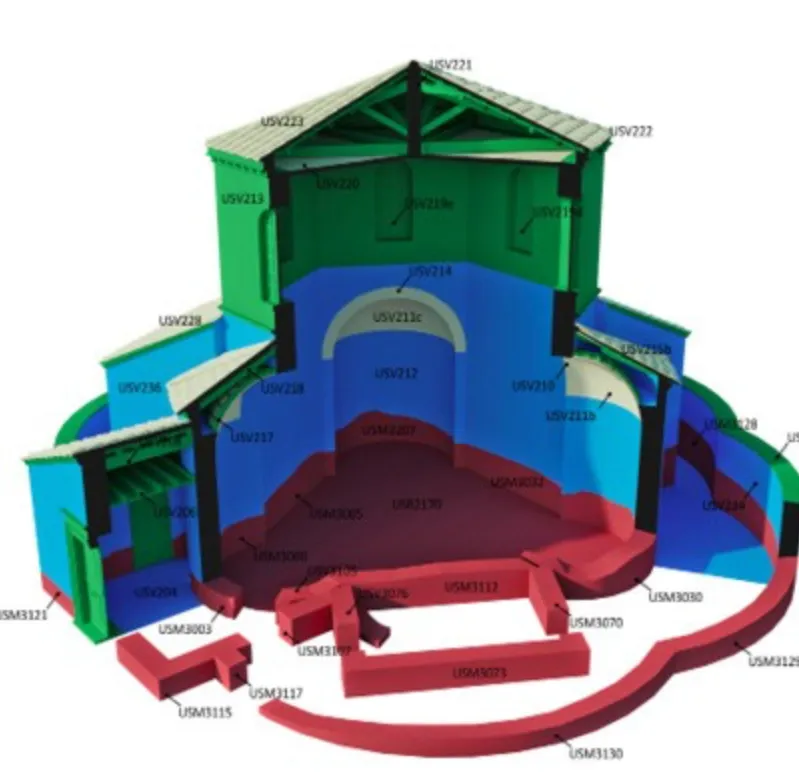
The Roman villa, dated between the end of the 3rd and the 7th century, is characterised by monumental architecture and decoration. The so-called trefoil hall represents the most important part of the late-antique residential complex: it was built between the end of the 4th and the beginning of the 5th century as a result of a monumental rearrangement of the villa. During the 6th century the hall changed its destination and became the centre of several handcraft activities, until it was abandoned in the 7th century.
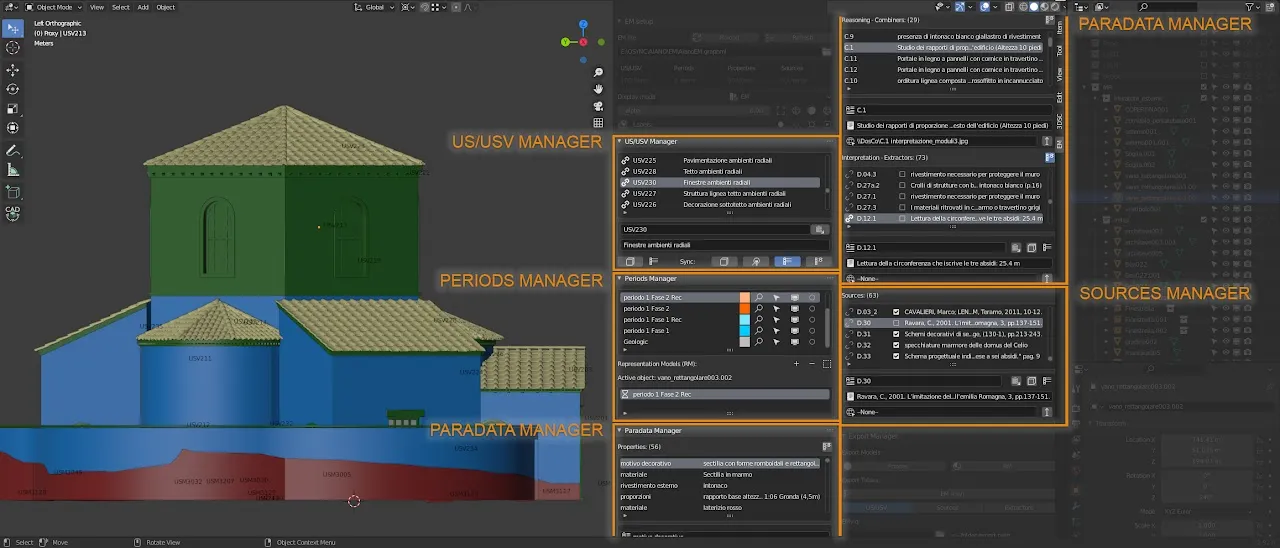
Proxy models of the reconstruction
How EM was used
Because of the villa’s state of conservation and its particular architecture, EM was employed to:
- map every available information source and the reasoning behind every reconstructive decision;
- manage the whole virtual reconstructive process of the late-antique shape of the trefoil hall;
- produce illustrative images for dissemination and scientific purposes, based on proxies and obtained using EM representation features.
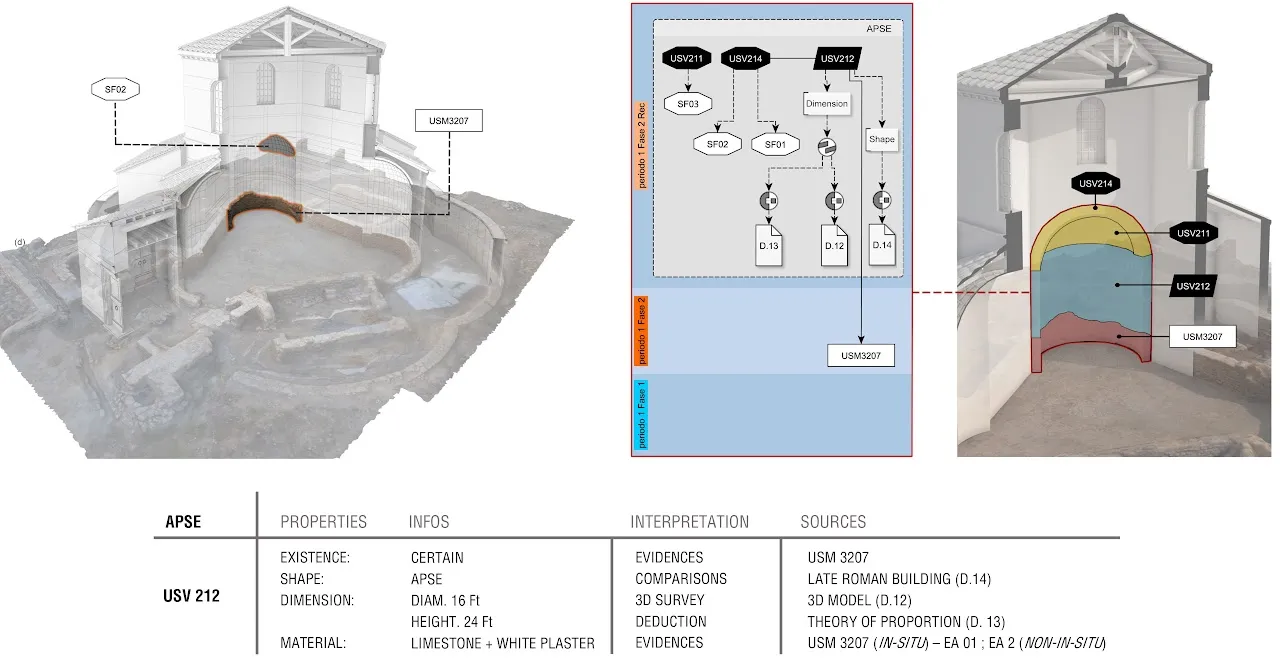
Interaction with proxy models within Blender
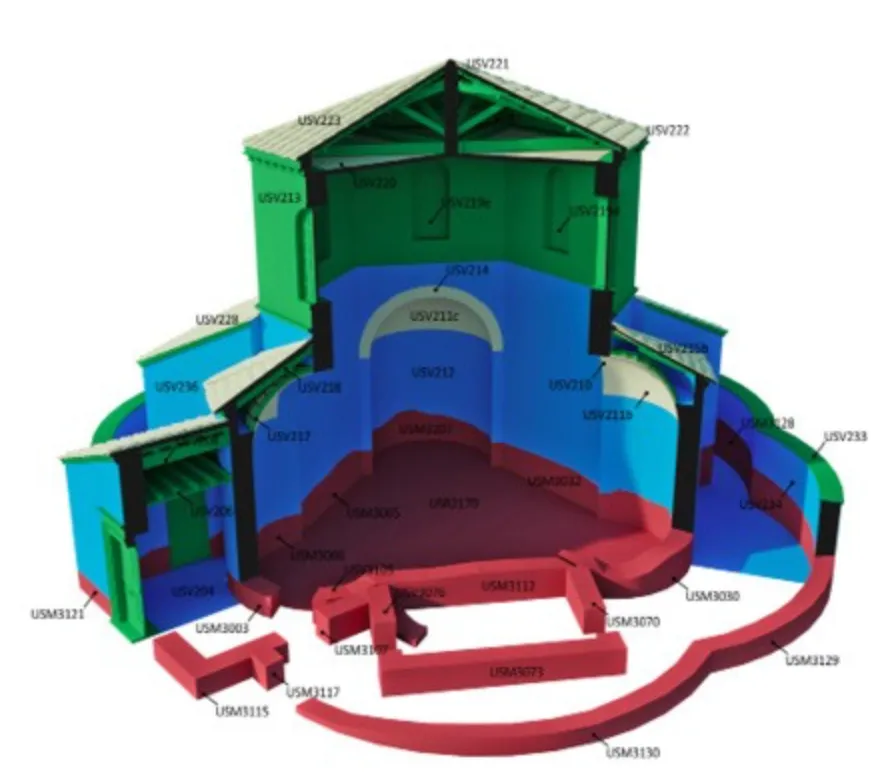
EM graph and proxy models
References
Daniele F., Demetrescu E., Cavalieri M., Pace G., Lenzi S. (2019). 3D Modelling and Visualization in Field Archaeology. From Survey to Interpretation of the Past Using Digital Technologies. Groma 4. DOI 10.12977/groma26.